
There's something about Mary
But it's not what you think.

In recent years, Maryam Magdalitha has become something of a feminist icon. Jesus’s most famous female follower has been rehabilitated, re-evaluated, reformed, and re-imagined. Even though - or perhaps because - we know very little about her, she’s been made into something much more than the few sentences given her in the Bible.
What do we know? That once upon a time, there lived a woman who suffered enormously, and was healed completely.
She became a follower of the man who healed her, funding his mission and devoting herself to spreading his gospel.
She stood witness to his state-sanctioned murder, and helped to bury him. She was the first to see him alive after his death, and the first to believe in his resurrection.
These fragments simultaneously say so much, and also say so little.
Her closeness to Jesus made a lot of people (men) feel uncomfortable. In a time when women were viewed as property - first of their fathers, and then of their husbands - to be confronted with a female person who was connected to neither, and yet was as devout as any of the twelve disciples. Perhaps more so, for we don’t hear of Mary competing over whether she was the greatest follower, unlike the disciples at the Last Supper. She wasn’t like Judas, who betrayed Jesus with a kiss, or Peter, who promised never to abandon Jesus and then denied knowing him three times in one night.
Mary’s devotion didn’t waver.
I’m guessing that it made a lot of male followers feel uncomfortable. So much so that Pope Gregory I in the sixth century began the process by which she would become known as a reformed prostitute.
There are a lot of Marys - or Maryams, as they would have been known in Aramaic - in the Gospels. And I guess it’s easy to confuse them. But you don’t have to read the Gospels that closely to learn that Jesus was friends with two different Marys.
Mary of Bethany had a sister called Martha and a brother called Lazarus. In one of the Gospel stories, Mary of Bethany anoints Jesus’s feet with oil. In another Gospel story, Jesus’s feet are also anointed with oil, but this time by a sinful woman. It’s usually assumed that this sinful woman was a prostitute, although it’s never made clear what her sins were.
It’s possible, I suppose, that Pope Gregory might have assumed that Mary of Bethany was a prostitute. But even that assumption doesn’t really work, because in another story, Jesus says she has ‘chosen the better path.’ She’s depicted as quiet and pious.
But Pope Gregory didn’t do that. He wrote that the woman who had anointed Jesus’s feet with oil was Mary Magdalene - and that therefore Mary Magdalene and the sinful woman were one and the same.
That conflation wasn’t a mistake. Mary Magdalene is the most powerful woman in her own right in the New Testament. Mary Magdalene has money that she uses to fund Jesus’s mission. Mary M stays to watch him die when his disciples stay away. And she is the first to see the risen Christ. She’s the first true believer.
Mary Magdalene had to be taken down several pegs, and what better way to do so than to link her erroneously with prostitution?
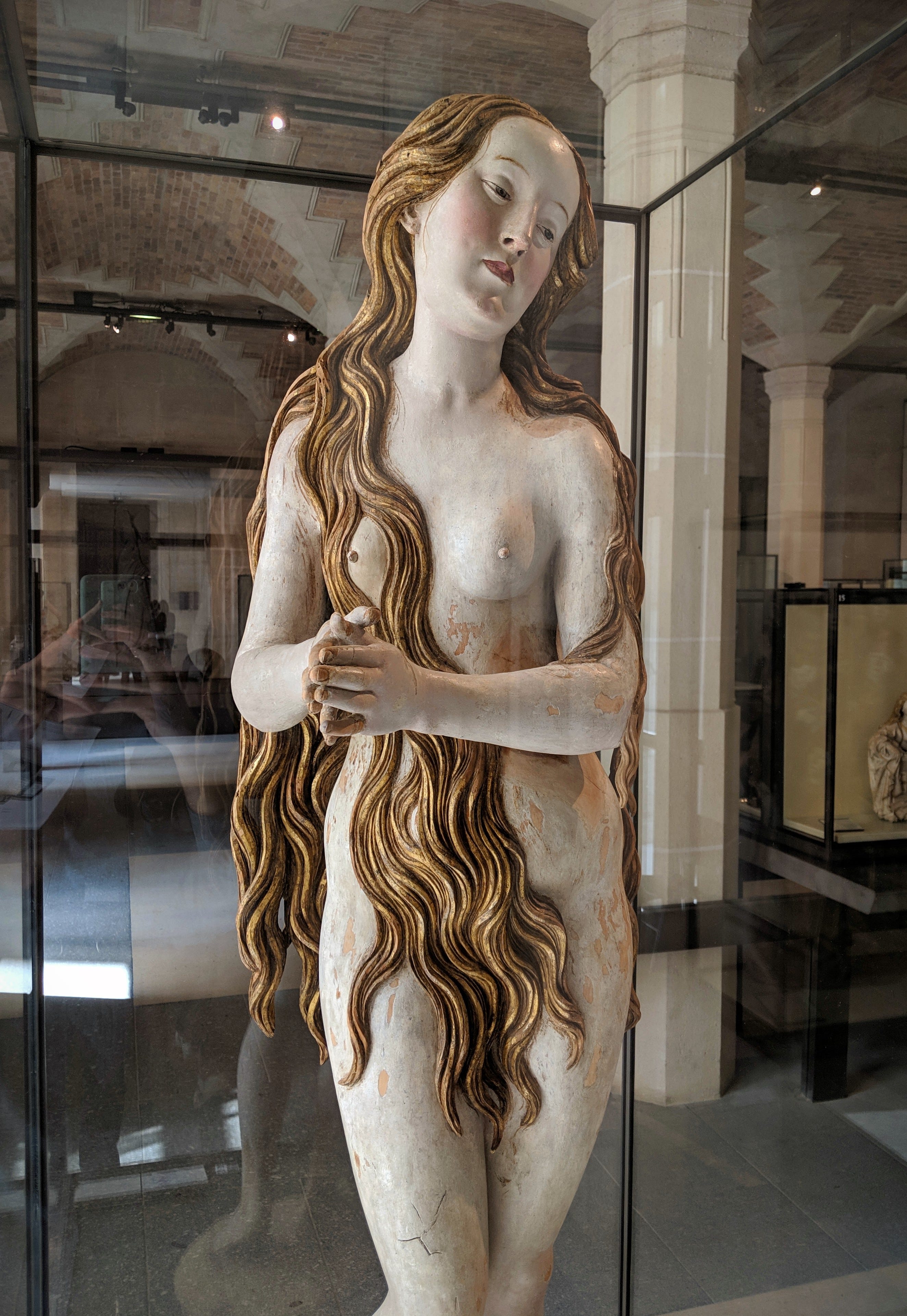
This fallacy was believed and promoted for hundreds of years. It wasn’t until 1969 that Pope Paul VI corrected the records. And not surprisingly, it’s too little, too late. Because Mary Magdalene had already entered the popular imagination as a reformed prostitute, a tart with a heart who decided to mend her ways. The musical Jesus Christ Superstar, written by Andrew Lloyd Webber and Tim Rice, came out the year after that correction, but continued the theme of the penitent prossie.
But something even stranger has been happening recently. In this crazy world we now live in where prostitution has been rebranded as just another job, stripping is empowerment and fulfilment of your darkest desires is a click away, Mary Magdalene has been rebranded as a sex-positive feminist icon.
It started with Lady Gaga’s pop reimagining in 2011, with herself as Mary Magdalene in love with Judas. (In the most Biblical sense, I am beyond repentance
Fame hooker, prostitute, wench). The project then became entwined with notions of ‘the divine feminine,’ tantric relationships, and ‘awakening the sacred prostitute within.’
In other words, while the Catholic Church is rightly vilified for calling Mary Magdalene a prostitute, that portrayal continues on, this time via a feminist lens.
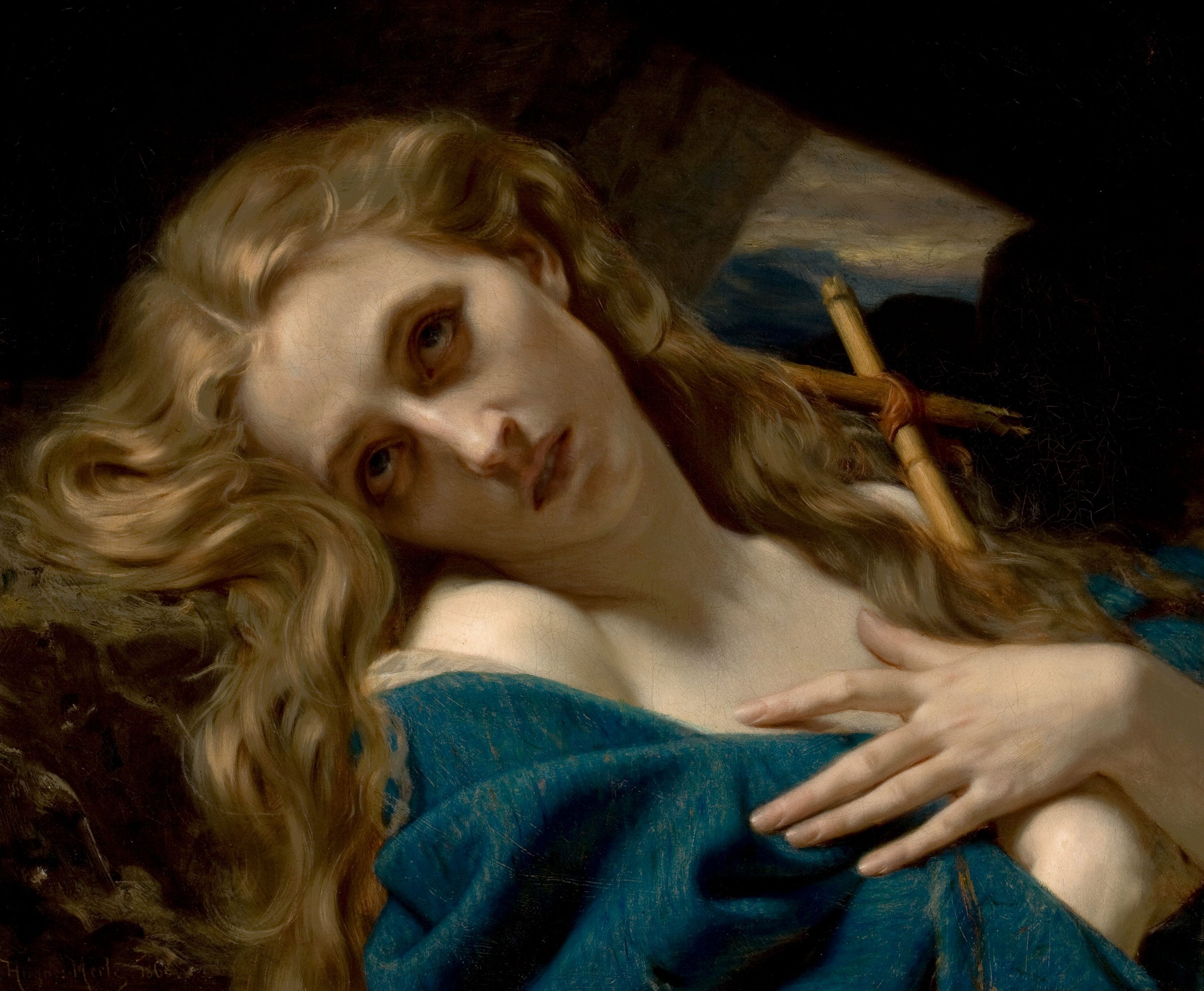
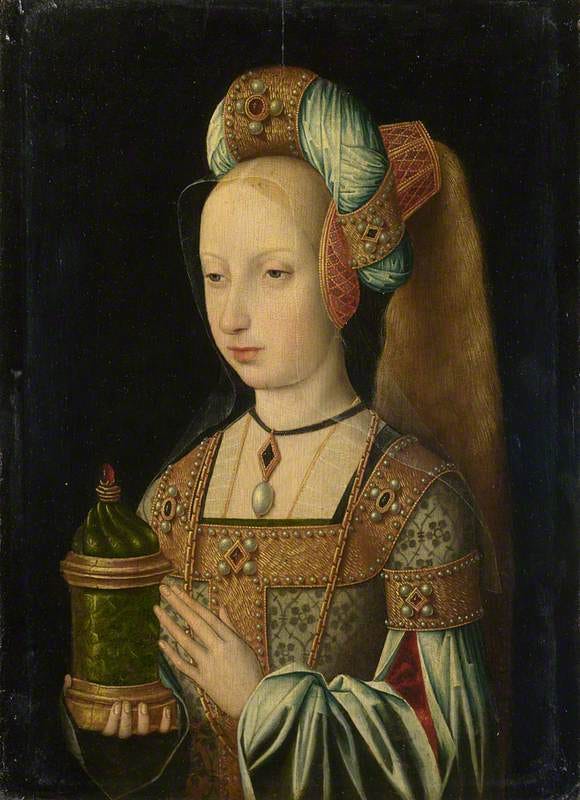
In art throughout the centuries, Mary M was often painted either wearing red or with red hair, to emphasise her sinfulness. She was often naked or topless, or at the very least a bit sexy.
And in the modern era?
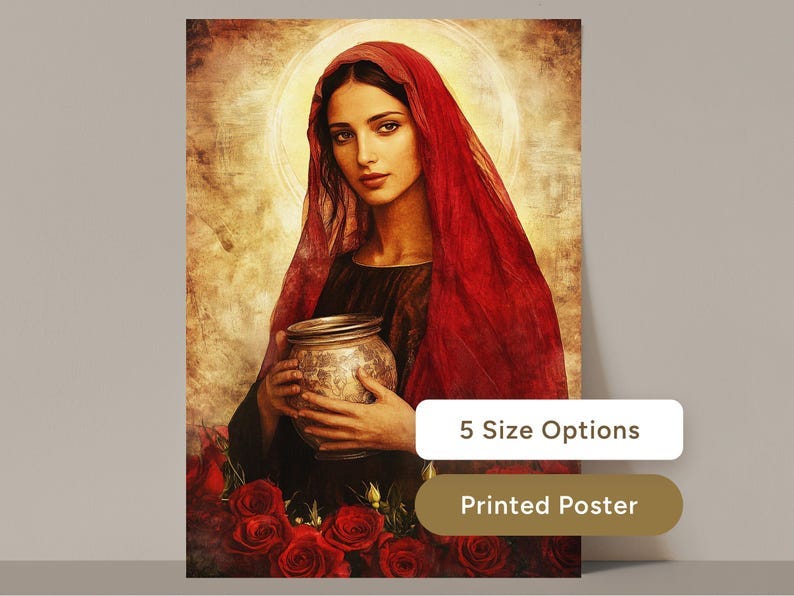
Still in red, still holding that erroneous jar of oil. And still looking sexy. You can see some more examples here.
Mary Magdalene still carries the taint of licentiousness. She’s still the right sort of sinner. Still objectified. Still used to represent desire. Still the tart with the heart.
But her past doesn’t have to be pulled out of thin air. There’s no need to imagine her as a sexy oil-holder when we know from the Gospels that she was possessed by seven demons that Jesus cast out of her. That’s neither the divine feminine or sex work. Whatever it was, it sounds absolutely brutal.
What were these demons? In the Bible, demonic possession is described in ways that appear to modern eyes like physical or mental ailments such as epilepsy, madness, or muteness. Mary M’s aren’t described, which means we have freedom to imagine.
Did she suffer mental illness? Was she physically afflicted? Perhaps she was bedridden, perhaps she’d lost all hope. And then she met Jesus, who healed her. Who wouldn’t become a devoted follower, after that? From despair to hope. That’s a journey we can all get on board with.
So let’s reclaim Mary Magdalene. She’s not a repentant prostitute. Not an object for our desire or aspiration. She’s a woman who went through something brutal, and emerged into a new world of hope. And stayed with that hope beyond the bitter end.
I wrote about Mary for one of my first Substack posts. Here it is:
I would love you to follow me on Substack or subscribe. And if you’re reading this on the Substack website or app, please press the ‘like’ button if you’ve enjoyed it. Thank you!
Thank you for this reflection Steph and helping me to review all these influences. You have reminded of the poignant JC Superstar song, “I don’t know how to love him” - listening to this as a teenager, I took it all at face value…..
Oh I see by power you may mean that she had money?